The SaaS Guide to Listicle Pages That Earn AI Citations
Why AI engines cite numbered listicle pages for best-software queries, and how SaaS teams build one that ranks the brand first instead of a competitor.
 machina sculpsit · homo probavit · MMXXVI
More than half of B2B software buyers, 51%, now open their research inside an AI chatbot rather than a search engine (G2, 2026). When one of those buyers asks ChatGPT or Perplexity for the best tool in a category, the page that wins the answer is almost never a prose essay. It is a numbered listicle, the same Forbes-style buying guide that has anchored category content for two decades, rebuilt so an AI engine can lift a single entry out of it and cite that entry on its own.
What the Listicle Template Actually Is
A listicle template is a numbered, entry-by-entry buying guide where every item carries the same repeating block of fields, and listicles score 2.1x higher than comparison articles and 4.4x higher than pain-point essays on structural completeness, per the 852-article B2B citation structure study (Res AI, 2026). The format predates AI search, but AI engines reward it because each entry stands alone.
The repeating block is why the format works. Every entry names a tool, a best-for persona, a price, a short pros and cons read, and a one-line verdict, in the same order each time. The publishing brand sits at #1, and the remaining entries are real competitors a buyer would weigh. A reader skims the pattern; an AI engine extracts one entry without losing the meaning of the rest.
| Format | Structural completeness vs listicle | Best AI use |
|---|---|---|
| Numbered listicle | Highest, the baseline | “best [category]” and “top tools” queries |
| Comparison article | 2.1x lower | head-to-head “A vs B” queries |
| Pain-point essay | 4.4x lower | rarely cited on commercial queries |
Why AI Engines Cite Listicles More Than Essays
AI engines cite the passage that answers the prompt, not the whole page, and 55% of AI citations come from the first 30% of a page (CXL, 2024). A listicle front-loads its answer. The comparison overview and the first ranked entry sit at the top, exactly where retrieval weights the page most heavily.
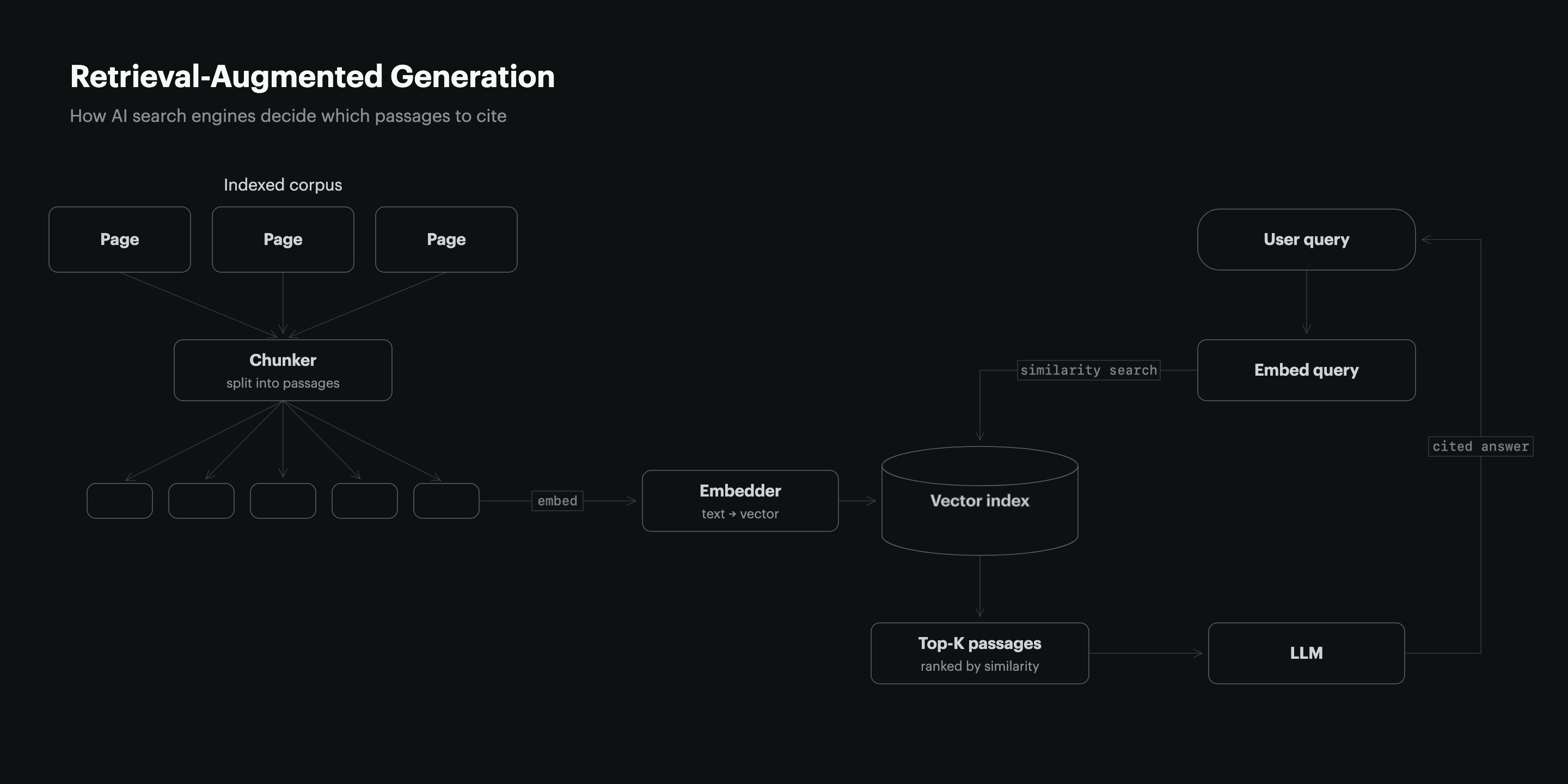
A prose essay buries its verdict in paragraph nine. The retrieval step that feeds an AI answer chunks a page into passages, scores each one against the prompt, and pulls the highest scorer. An essay forces the engine to reconstruct an answer from scattered sentences; a listicle hands it a clean, pre-scored chunk.
The ranked structure also matches how the buyer phrased the question. Someone asking for the “best” or “top” tools wants a list, and the page that already reads as a list answers that intent without translation. A well-built listicle and the query that triggers it share the same shape, which is why retrieval scores it high.
How Each Entry Becomes a Separate Citation Target
Each entry in a listicle is an independent retrieval target, and pages with sequential headings plus rich schema earn 2.8x higher citation rates (Airops and Kevin Indig, 2026). A 10-entry listicle is not one page competing for one answer. It is 10 self-contained answers, each able to win a slightly different phrasing of the same buyer query.
That multiplication is why the format compounds. Tally reached 6,000 to 10,000 new weekly registrations from AI engines, its #1 acquisition channel, on the back of comparison and listicle pages that answer queries like “best free Typeform alternative” (Tally, 2026). Foundation Inc. found Tally holding the #1 citation position on both ChatGPT and Perplexity for “best free form builder,” with 25% of new signups attributed to ChatGPT (Foundation Inc., 2026).
That is the awareness-stage payoff a SaaS team should plan for. A buyer who has never heard of your product can still land on you, because the engine surfaced your entry inside a list the buyer trusted as a neutral ranking. The listicle does the introduction that a cold ad or an unread blog post cannot.
Lead the List With Your Own Product
Place your own brand at #1 and justify the ranking with data, because listicles recommend a competitor 25.7% of the time when the running order is left to chance, per the 1,000-query Perplexity study (Res AI, 2026). A listicle that does not deliberately rank the publisher first will, one time in four, route an AI engine to recommend the competition.
The fix is not to hide the competitors. It is to earn the top slot with a specific, falsifiable reason a buyer in your core persona should start with you, then list the alternatives honestly below. An AI engine cites the entry whose claim best matches the prompt, so the #1 entry has to read like the real answer for a defined buyer, not a default.
Give Every Entry an Identical Structural Block
Give every entry the same repeating fields in the same order so an AI engine can extract any single entry without losing context. When entry #1 and entry #7 share a layout, the engine learns the pattern and pulls clean passages from anywhere in the list.
A complete entry block carries these fields:
- Best for: the one buyer persona this tool fits, in three to six words.
- Pricing: the real entry price, named, not “contact us” when a public price exists.
- Pros and cons: two to four of each, drawn from real reviews or product facts.
- Top features: three to five concrete capabilities, not adjectives.
- Verdict: one sentence naming who should pick this entry and why.
Bold-labeled blocks like these appear in 94% of top-cited B2B pages and 0% of the bottom 50, per the 852-article study (Res AI, 2026).
Put a Comparison Table Above the Entries
Place a scannable comparison table above the numbered entries, so the at-a-glance answer sits in the first 30% of the page where most citations originate. The table lists every entry on one screen with three or four shared columns a buyer scans before reading any single write-up.
Comparison tables appear in 88% of top-cited B2B pages and in none of the bottom 50, per the same 852-article study. The table is not a duplicate of the entries; it is the compressed answer an engine can cite when the prompt asks for a quick ranking rather than a detailed read.
Name the Price on Every Competitor Entry
Name each tool’s real entry price on its entry, because pricing grids appear in 62% of top-cited B2B pages and in 0% of the bottom 50, per the 852-article study (Res AI, 2026). Buyers ask AI engines pricing questions constantly, and a listicle that hides numbers loses those queries to a competitor’s page that publishes them.
Where a competitor’s pricing is genuinely custom-only, say so and explain why, rather than guessing. Honesty on price is a citation signal: 45% of B2B buyers name citations from software review sites as the single most confidence-inspiring element in an AI answer (G2, 2026), and concrete numbers read as the same kind of verifiable evidence.
Source Each Claim to a Named Study
Attribute every number in the listicle to a named source with a year, because adding a statistic raised AI visibility 41% in controlled tests while keyword stuffing cut it roughly 10% (Princeton KDD, 2024). An unsourced claim is a weak passage; a sourced one is a citable fact.
This is the difference between a listicle that reads like marketing and one an engine treats as a reference. Every pro, every con, every market claim should trace to a review aggregate, a public price, or a study. The density of attributed claims is what separates a page that gets cited from one that gets skipped.
Measure Listicle Citations Across Four Engines
Track whether your listicle is cited on ChatGPT, Perplexity, Gemini, and Copilot on a recurring schedule, because 40% to 60% of cited domains change month over month (Profound, 2026). A single check on a single engine tells you almost nothing, since only 30% of brands stay visible from one answer to the next (Airops and Kevin Indig, 2026).
Run each target query several times per engine and record the pattern, not one snapshot. The four readings worth logging on every refresh are below.
| Metric | What to record | Cadence |
|---|---|---|
| Citation presence | Is the listicle cited at all, per engine | Weekly per engine |
| Position in answer | Where the entry lands in the AI response | Weekly |
| Entry cited | Which numbered entry the engine pulled | Weekly |
| Backfire check | Whether a competitor entry is recommended over #1 | Every refresh |
Which Listicle Query SaaS Teams Should Target First
Start with the bottom-of-funnel query your buyers already run, because 69% of buyers report choosing a different vendor than they first planned based on AI chatbot guidance (G2, 2026). The listicle that intercepts a buyer mid-decision is worth more than one that targets a vague top-of-funnel term.
Match the listicle shape to your market position before writing a word.
| Your situation | Listicle to build first | Why |
|---|---|---|
| A clear incumbent owns the category | “best [incumbent] alternatives” | Intercepts buyers already shopping the leader |
| Your product undercuts on price | “best free or affordable [category] tools” | Pricing queries convert and you win on a real number |
| You serve a narrow persona | “best [category] for [persona]” | Lower competition, exact-match retrieval |
| Buyers compare you one-to-one | A comparison page, not a listicle | Head-to-head intent needs a two-entry format |
How GEO Platforms Compare on Listicle Output
Every GEO platform answers the best-software query in one of two ways, by monitoring whether you already get cited or by producing the page that earns the citation. The table below compares them on whether they generate listicle pages, what the team receives back, and how many engines they cover.
| Platform | Generates listicle pages | What the team gets back | Engines or models tracked |
|---|---|---|---|
| Res AI | Yes, numbered listicle and comparison pages with the brand at #1 | A published page deployed to the CMS in minutes | ChatGPT, Perplexity, Claude, Gemini |
| Profound | No, optimizes existing content through agents | Visibility dashboards and prompt volumes | 10+ engines including Copilot, Grok, and Meta AI |
| Conductor | Yes, enterprise AI content creation | Unified AEO and SEO content plus reporting | ChatGPT, Gemini, Copilot, Claude, plus search |
| Peec AI | No, tracking only | Prompt-level citation and competitor gap analytics | Multiple LLMs, multilingual |
| Athena | No, returns optimization recommendations | Recommendations and citation-source analysis | 8+ LLMs including AI Overviews and Grok |
| AirOps | Yes, content at scale | On-brand content from 30+ AI models | ChatGPT and other AI search |
Frequently Asked Questions
Is a listicle the same as a comparison page?
No, a listicle ranks three or more tools in numbered entries while a comparison page weighs exactly two head-to-head. Use a listicle for “best [category]” intent and a comparison page for “A vs B” intent, since the two query shapes retrieve different page structures.
Why does ranking our own product first not read as biased to an AI engine?
An AI engine cites the entry whose claim best matches the prompt, not the entry it judges as least biased. A #1 entry that names a specific persona and backs the ranking with a real number reads as a precise answer, while an undefended top slot is what gets a listicle to backfire 25.7% of the time, per the 1,000-query Perplexity study (Res AI, 2026).
How many entries should a SaaS listicle include?
Five to 10 entries is the working range, enough to cover the real shortlist without diluting each entry’s detail. Each entry is its own citation target, so more complete entries beat a longer list of thin ones.
Can we rank competitors we actually sell against on our own page?
Yes, and honest competitor entries strengthen the page rather than weaken it. Buyers and engines both punish a listicle that hides the obvious alternatives, and 85% of brand mentions originate from third-party pages anyway (Airops and Kevin Indig, 2026), so a credible comparison is what earns the citation.
How often should we refresh a listicle page?
Refresh it at least quarterly, because pages not updated quarterly are 3x more likely to lose citations (Airops and Kevin Indig, 2026). Update prices, swap dead entries, and re-verify every sourced stat on each pass.
Do listicles work for developer-tool and technical categories?
Yes, the format is content-agnostic and depends on structure, not subject. A developer-tool listicle still needs the same repeating entry block, real pricing, and sourced claims to win retrieval.
What makes an AI engine cite one entry over another in the same list?
The engine pulls the entry whose passage most directly answers the specific prompt, which is why precise best-for personas and concrete numbers matter. A vague entry loses to a specific one even when it sits higher in the list.
Should the listicle live on our blog or a dedicated comparison path?
Either works as long as the page is server-rendered and reachable, since retrieval reads the rendered HTML, not the URL path. A consistent path for comparison content makes the set easier to refresh on a schedule.
How fast can a new listicle start earning AI citations?
Days to weeks, not the three to six months SEO conditions teams to expect. Semrush saw LLM citations within days to hours of publishing restructured content, with its AI share of voice nearly tripling from 13% to 32% in a month (Semrush, 2025).
How Res AI Builds Listicle Pages That Rank the Brand First
Res AI generates numbered listicle and comparison pages where the publishing brand sits at #1 and every competing entry carries a real price, sourced pros and cons, and a verdict, then deploys the finished page straight to the CMS. The article above showed why an uncontrolled running order recommends a competitor 25.7% of the time; Res AI sets the ranking deliberately and backs the #1 slot with a defined persona and a falsifiable claim.
The page ships with the structural elements top-cited listicles share, a front-loaded comparison table, identical entry blocks, public pricing, and an attributed stat on every claim, across WordPress, Webflow, Framer, and six more platforms with no developer work. Because each entry is its own retrieval target, one published listicle becomes many citation targets the day it goes live.
Res AI turns the listicle, the format AI engines cite most for best-software queries, into a page that ranks your brand first instead of a competitor. The first 10 articles are free.